
- Download our Singapore Schools Guide
- Download our Moving to Singapore Guide (PDF)
One of the world’s major financial centres, Singapore gives expats access to leading banking systems, with dozens of local and foreign institutions present in the city-state. Needless to say, expats will find a full spectrum of services to manage their banking, money and taxes in Singapore, from consumer banking, asset management, and foreign exchange to dedicated insurance services and investment banking.
Money in Singapore
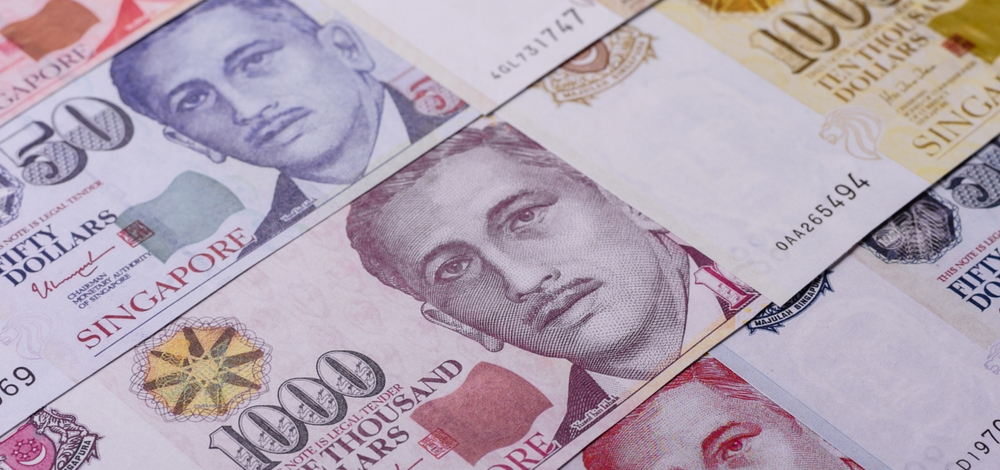
The unit of currency is the Singapore Dollar (SGD). One dollar is divided into 100 cents.
- Notes: SGD 2, SGD 5, SGD 10, SGD 20, SGD 25, SGD 50, SGD 100, SGD 1,000, and SGD 10,000
- Coins: 1, 5, 10, 20 and 50 cents, and SGD 1
Banking in Singapore
With so many foreign and local banks in Singapore, expats will certainly not be at a loss for a reputable service provider. It’s important to consider the services offered, the location and the ATM network available when choosing a bank.
The banking system in Singapore is recognised globally for its efficiency and robust security measures. With the presence of major multinational banks like HSBC, Standard Chartered, and Citibank alongside strong local institutions, customers have access to a broad range of financial services. These banks offer options tailored to both residents and foreigners.
Opening a bank account
It’s easy to open a bank account in Singapore, and the process can be completed in a single day. English is the primary administrative and professional language in Singapore, so expats are unlikely to face a language barrier when it comes to managing money.
To open an account, expats typically need to provide proof of identity, residency status, and financial credibility. The exact documentation varies by banks, but a passport, employment pass, and sometimes proof of address are usually required. Some banks require an in-person visit to a branch to start the process, while others allow online initiation.
ATMs and credit cards
ATMs abound in Singapore, most of which accept international cards. ATM fees at local banks tend to be lower than at international banks.
Credit cards are widely accepted, though expats should be advised that international cards tend to incur high transaction costs. However, local cards can be more cost-effective, especially for frequent transactions. It is advisable for expats to consider applying for a local credit card if they plan to stay in Singapore for an extended period.
As Singapore progresses towards a cashless society, digital payments have become increasingly prevalent. However, cash remains a significant mode of transaction, particularly in traditional markets and small retail outlets. Major credit cards are accepted in most establishments.
For daily transactions, it’s advisable to carry a mix of cash and cards. ATMs are widespread, providing easy access to cash withdrawals. Compared to currency exchange at banks or money changers, ATM withdrawals are usually more cost effective.
Taxes in Singapore

All expats working in Singapore are liable to pay income tax, though the specifics will depend on their tax residency status.
Expats are considered tax residents in Singapore if their period of stay exceeds 183 days in a year or if they hold Singapore Permanent Residency. For tax residents, the income tax rates are progressive, ranging from zero to 24 percent. Non-residents, on the other hand, are taxed at a flat rate of either 15 or 24 percent, depending on the source of their income.
Understanding these tax brackets is crucial for expats to plan their finances effectively while in Singapore. It's best to enlist the services of an expat tax professional.
Useful links
*Tax regulations are subject to change at short notice, and expats are advised to seek the assistance and advice of a professional tax consultant.